Standing Seam vs. Corrugated Metal Roofing: Which Is Right for Phoenix?
Standing seam vs corrugated metal roofing in Phoenix. Costs, durability, heat performance, and best fit for you.
Two Metal Roofing Styles, One Extreme Climate
If you're considering metal roofing for your Phoenix home, one of the first decisions you'll face is choosing between standing seam and corrugated metal panels. Both are excellent choices for the Valley of the Sun, but they differ significantly in design, performance, cost, and aesthetics. Understanding those differences is essential before investing in a roof that needs to withstand 115°F summers, intense UV radiation, and violent monsoon storms.
In this guide, we break down the key differences between standing seam and corrugated metal roofing so you can make the most informed decision for your Phoenix-area property.
Design and Structural Differences
Standing Seam Metal Roofing
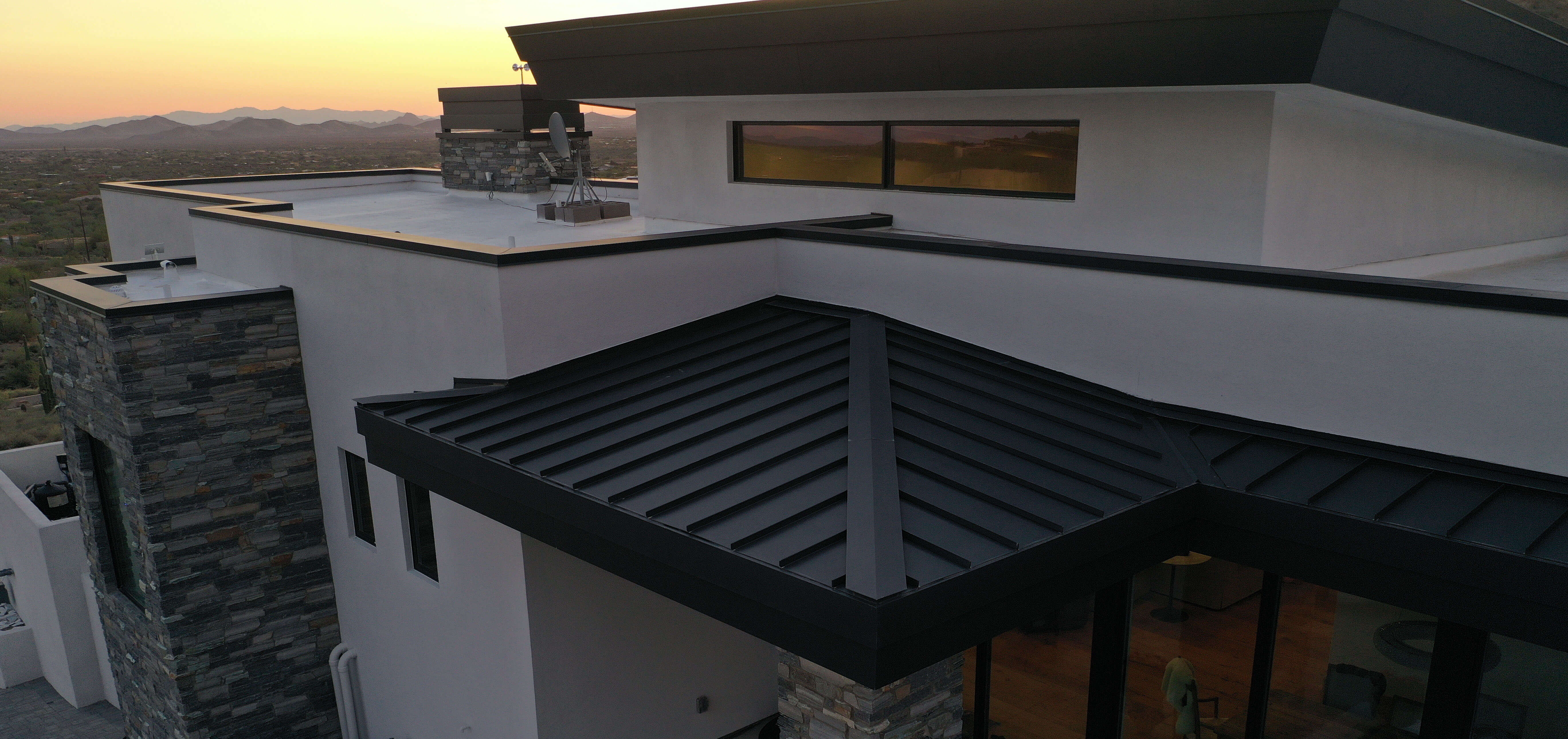
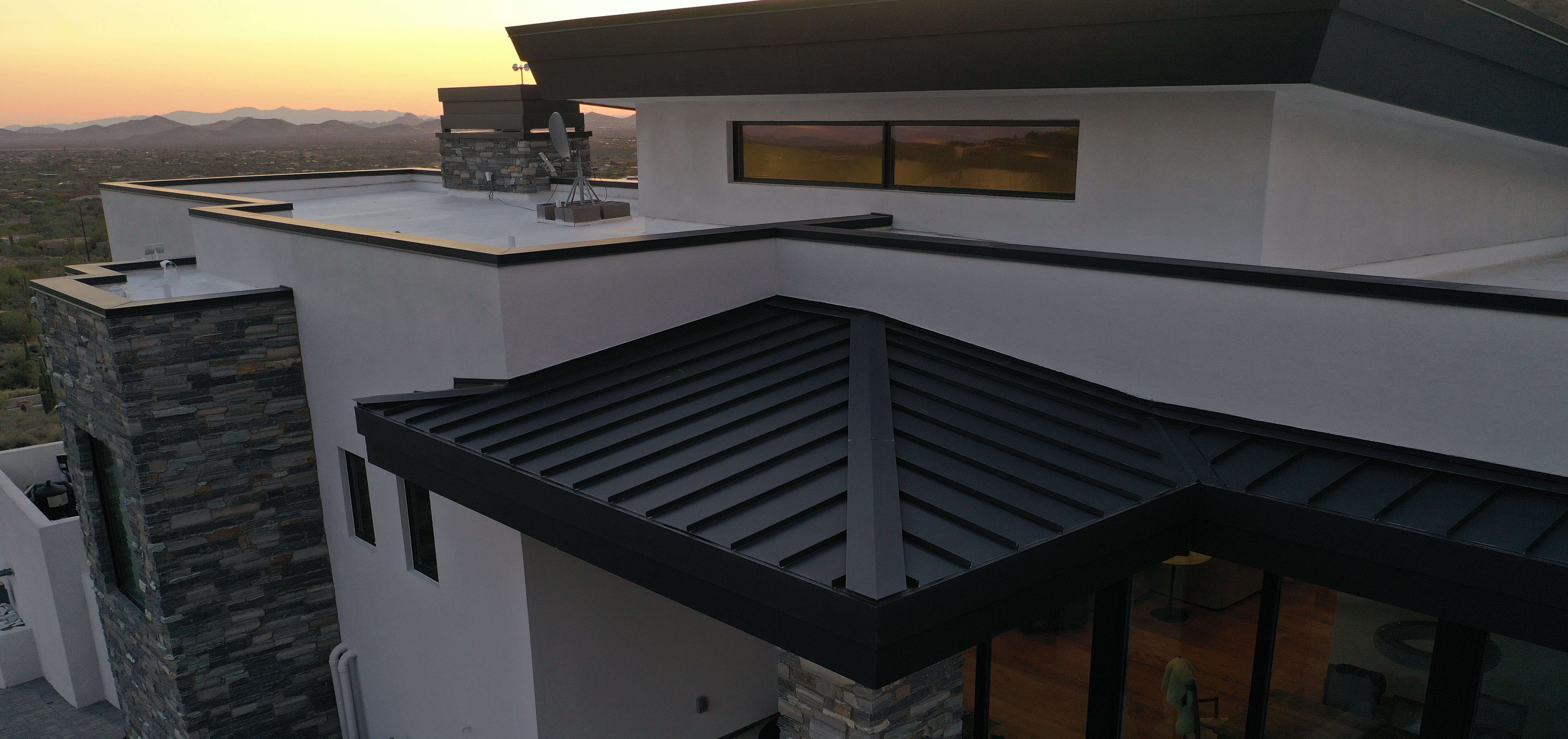
Standing seam panels feature raised, interlocking seams that run vertically from the ridge to the eave of the roof. The seams typically rise 1 to 2 inches above the flat panel surface and are joined using a mechanical lock or snap-lock connection. The most important design feature is that all fasteners are concealed beneath the seam, which means no screws or nails are exposed to the elements.
Panels are typically 12 to 18 inches wide and are manufactured from 24-gauge or 26-gauge steel, or from aluminum in .032 or .040 thickness. They can also be made from zinc or copper for premium applications.
Corrugated Metal Roofing
Corrugated metal panels have a repeating wave or ribbed pattern that gives them structural rigidity. Unlike standing seam, corrugated panels are fastened through the face of the panel using exposed screws with neoprene washers. The panels overlap at the edges and are screwed down at regular intervals.
Corrugated panels are commonly available in 26-gauge or 29-gauge steel, as well as aluminum. The panels are typically 26 to 36 inches wide, which means fewer panels per roof and faster installation.
Performance in Arizona's Extreme Heat
Phoenix regularly exceeds 115°F in the summer, and roof surface temperatures can soar past 170°F. Both standing seam and corrugated metal roofing handle heat far better than traditional asphalt shingles, but there are performance differences worth understanding.
Reflectivity and Cool Roof Ratings
Both panel types can be finished with Energy Star-rated cool roof coatings that reflect solar radiation and emit absorbed heat efficiently. Standing seam panels, however, tend to have a slight edge because:
- No exposed fasteners means no thermal bridging through screw penetrations
- The raised seam design allows for above-sheathing ventilation, creating an air gap that reduces heat transfer into the attic
- Standing seam panels are more commonly available with premium PVDF (Kynar 500) paint finishes that maintain reflectivity for decades
Corrugated panels with quality cool-roof coatings still perform exceptionally well. As we discuss in our article on whether metal roofs make Phoenix homes hotter, both types dramatically outperform shingles and many tile systems in terms of energy efficiency.
Thermal Expansion and Contraction
Metal expands and contracts with temperature changes—a major consideration when your roof can swing 80°F or more between a summer afternoon and the following dawn. Standing seam systems are specifically engineered for this. The panels use clip fastening systems that allow the metal to float and move independently of the roof deck, preventing buckling and stress on fasteners.
Corrugated panels, because they are face-fastened, have less freedom to move. Over years of extreme thermal cycling in Arizona, this can lead to elongated screw holes, loosened fasteners, and potential leak points if not properly maintained. Quality installation with appropriate fastener patterns mitigates this, but it's an inherent design limitation.
Cost Comparison: What to Expect in the Phoenix Market
Cost is often the deciding factor for Phoenix homeowners, and the gap between standing seam and corrugated is significant.
Standing Seam Pricing
For a typical Phoenix-area residential installation, expect to pay between $8 and $14 per square foot installed. The wide range reflects differences in:
- Panel material (steel vs. aluminum vs. zinc)
- Gauge thickness
- Paint system (standard SMP vs. premium PVDF/Kynar)
- Roof complexity (valleys, hips, dormers, penetrations)
- Tear-off and disposal of existing roofing
For a typical 2,000-square-foot Phoenix home with a standard roof layout, a standing seam installation generally runs between $16,000 and $28,000.
Corrugated Metal Pricing
Corrugated metal roofing is substantially more affordable, typically ranging from $4 to $8 per square foot installed in the Phoenix market. For that same 2,000-square-foot home, you're looking at approximately $8,000 to $16,000.
The lower cost is driven by less expensive materials, faster installation, and simpler flashing details. For a more detailed breakdown of pricing across all metal roofing types, see our 2026 Phoenix metal roof pricing guide.
Long-Term Cost of Ownership
While corrugated metal costs less upfront, standing seam typically delivers a lower total cost of ownership over a 40- to 60-year lifespan. Standing seam roofs require less maintenance, have fewer potential leak points, and their concealed fasteners don't need periodic replacement. Corrugated roofs may need fastener re-torquing or replacement every 10 to 15 years, and exposed screw washers can degrade in Arizona's UV environment.
If you're weighing financing options for your project, it's worth calculating the 30-year total cost rather than focusing solely on the upfront price.
Durability and Lifespan
Standing Seam
- Expected lifespan: 40 to 60+ years
- Wind resistance: Rated up to 140 mph or higher with proper installation
- Leak risk: Very low — no exposed fastener penetrations
- Hail resistance: Good to excellent depending on gauge and material (thicker gauge = better dent resistance)
Corrugated Metal
- Expected lifespan: 25 to 40 years
- Wind resistance: Good (typically rated 110-120 mph), though exposed fasteners are the weak point in extreme wind events
- Leak risk: Moderate over time — exposed fastener washers can deteriorate in Phoenix heat
- Hail resistance: Moderate — thinner gauges (29-gauge) are more prone to denting
For more on how metal roofs handle Arizona's monsoon season, read our guide on hail and storm damage on metal roofs.
Aesthetic Considerations for Phoenix Homes
Your roof is a major visual element—especially in Arizona where low-slope and moderate-pitch roofs are common and often visible from street level.
Standing Seam Aesthetics
Standing seam delivers a clean, modern, architectural look with crisp vertical lines. It's increasingly popular in contemporary Phoenix home designs, including custom builds in Paradise Valley, Arcadia, and North Scottsdale. The concealed fasteners contribute to a smooth, uncluttered appearance.
Standing seam panels are available in a wide range of colors, from traditional earth tones to bold modern hues. Many Phoenix homeowners choose light colors—desert tan, light gray, or white—for maximum solar reflectivity.
Corrugated Aesthetics
Corrugated metal has a more rustic, agricultural, or industrial aesthetic. It works beautifully for ranch-style homes, farmhouse designs, and certain Southwestern architectural styles. However, it may not suit every neighborhood or HOA requirement in the Phoenix metro area.
Some HOAs in master-planned communities may accept standing seam metal but reject corrugated panels due to aesthetic guidelines. Always check your CC&Rs before committing.
Residential vs. Commercial: Which Works Where?
Residential Applications
For residential metal roof installations in Phoenix, standing seam is the premium choice. Its clean look, superior performance, and longer lifespan make it ideal for homeowners who plan to stay in their home long-term or who want maximum curb appeal and resale value.
Corrugated metal can be an excellent budget-friendly choice for residential properties, especially for detached structures (casitas, garages, workshops) or homes with architectural styles that complement the corrugated look.
Commercial Applications
For commercial properties in Phoenix, both systems see heavy use. Standing seam is preferred for retail, office, and hospitality buildings where aesthetics matter. Corrugated metal is commonly used for warehouses, industrial buildings, and agricultural structures where cost efficiency is the priority.
Both systems can be installed on low-slope commercial roofs with proper engineering, though standing seam performs better at lower pitches due to its sealed seam design.
Installation Differences
The installation process differs significantly between the two systems, which affects labor costs, project timelines, and contractor requirements.
Standing Seam Installation
- Requires specialized training and equipment (seaming tools, panel rollers)
- Panels are often roll-formed on-site to exact measurements, minimizing waste and eliminating end laps
- Installation takes longer due to precise alignment and seaming requirements
- Flashing details at penetrations, valleys, and transitions require skilled metalwork
- Not every roofing contractor is qualified — choose a company with proven standing seam experience
Corrugated Installation
- Simpler installation process using standard tools
- Panels come in pre-cut lengths and are screwed down through the face
- Faster installation (often 30-50% less labor time than standing seam)
- Easier to source replacement panels if repairs are needed
- More contractors are experienced with corrugated installation
Regardless of which system you choose, proper metal roof installation by a qualified Phoenix contractor is the single most important factor in long-term performance.
Warranty Differences
Warranties reflect the confidence manufacturers have in each product type, and the differences are notable.
Standing Seam Warranties
- Panel/material warranty: Typically 30 to 50 years
- Paint/finish warranty: 25 to 35 years for PVDF finishes (fade and chalk resistance)
- Weathertight warranty: Some manufacturers offer 15- to 25-year weathertight warranties on standing seam systems
Corrugated Warranties
- Panel/material warranty: Typically 20 to 30 years
- Paint/finish warranty: 10 to 25 years depending on finish type
- No weathertight warranty: Because the system relies on exposed fasteners and sealants, manufacturers generally do not offer weathertight guarantees
For a deeper dive into warranty details and what to look for, see our guide on metal roofing warranties for Phoenix homeowners.
Making the Right Choice for Your Phoenix Property
Here's a quick framework to help you decide:
Choose standing seam if:
- You want the longest possible lifespan with minimal maintenance
- You're building or re-roofing a home you plan to keep for decades
- You want a clean, modern aesthetic
- You prioritize energy efficiency and thermal performance
- You want the strongest possible warranty package
Choose corrugated metal if:
- Budget is a primary concern
- You're roofing a secondary structure or investment property
- The rustic or industrial aesthetic fits your home's design
- You want the fastest possible installation
- You're re-roofing a commercial building where cost per square foot matters most
Either way, metal roofing is one of the best long-term investments you can make for a Phoenix property. Compared to asphalt shingles or even tile roofing, metal delivers superior heat resistance, longevity, and protection against Arizona's extreme weather.
Get Expert Advice on Metal Roofing in Phoenix
At Pinnacle Roofing, we install both standing seam and corrugated metal roofing systems across the Phoenix metro area. Our team can help you evaluate your roof, discuss your priorities, and recommend the right system for your home or business.
Whether you need a complete metal roof replacement, repairs on an existing metal roof, or just want an honest assessment, we're here to help. Contact us today to schedule a free roof inspection and get a detailed estimate tailored to your property.