Tile Roof Underlayment: Why Phoenix Roofs Leak Even When Tiles Look Fine
Learn why Phoenix tile roofs leak even when tiles look fine. Underlayment failure from extreme heat is the hidden cause.
The Hidden Layer That Actually Waterproofs Your Tile Roof
Here's something that surprises most Phoenix homeowners: your tile roof tiles are not what keeps water out of your home. The tiles themselves are the first line of defense against sun, wind, and debris, but the real waterproofing barrier is a layer you've probably never seen — the underlayment.
Every year, roofing contractors across the Phoenix metro area respond to leak calls from homeowners who are confused because their tiles look perfect from the ground. The tiles aren't cracked, they're not missing, and the roof appears to be in great shape. But water is getting in. The culprit is almost always failed underlayment, and it's one of the most misunderstood aspects of tile roofing in Arizona.
Understanding how underlayment works, why it fails faster in our climate, and what to do about it can save you thousands of dollars in damage and help you make smarter decisions about your roof's long-term care.
What Is Roof Underlayment?
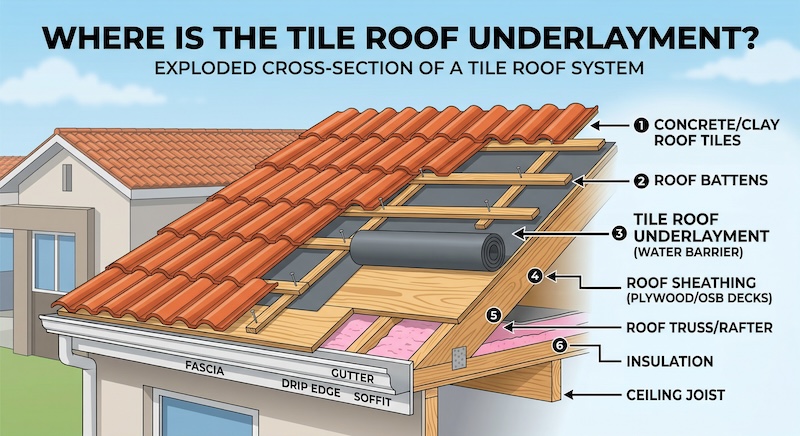
Roof underlayment is a waterproof or water-resistant membrane installed directly on top of the roof deck (the plywood or OSB sheathing) and beneath the tiles. Think of it as the actual roof — the tiles are more like a protective shell sitting on top.
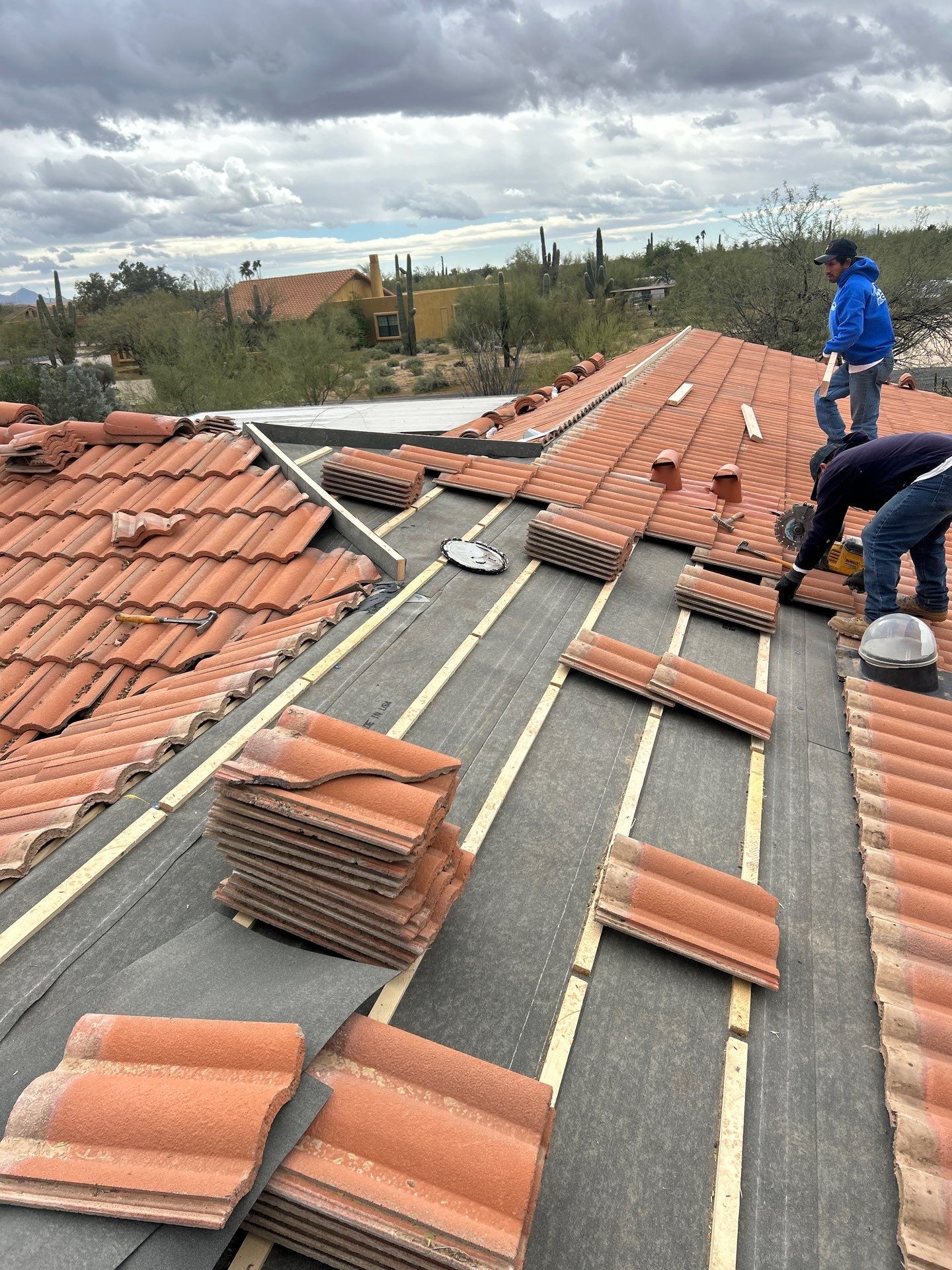
In a properly installed tile roof system, the layers from bottom to top are:
- Roof deck: The structural plywood or OSB sheathing attached to your rafters or trusses
- Underlayment: One or more layers of waterproof membrane fastened to the deck
- Battens (in some installations): Horizontal wood strips that create an air gap and provide attachment points for tiles
- Tiles: The clay or concrete tiles that form the visible exterior surface
When rain hits your roof, much of the water runs off the tile surface. But wind-driven rain, condensation, and water that works its way between tile overlaps all reach the underlayment layer. If the underlayment is intact, this water flows harmlessly down to the eaves and into your gutters. If the underlayment has deteriorated, water penetrates to the deck and eventually into your home.
Why Arizona Heat Destroys Underlayment Faster Than Anywhere Else
This is the critical point that every Phoenix homeowner needs to understand. The extreme heat that defines our climate is the number one enemy of roof underlayment, and it causes degradation far faster than in moderate climates.
Temperature Extremes on Your Roof
While Phoenix air temperatures regularly hit 110°F to 120°F in summer, the actual surface temperature of your roof is dramatically higher. On a typical July afternoon:
- Tile surface temperature: 150°F to 180°F
- Underlayment temperature: 140°F to 170°F
- Roof deck temperature: 130°F to 160°F
These extreme temperatures accelerate the chemical breakdown of underlayment materials. The oils and volatiles in asphalt-based underlayment literally bake out over years of exposure to this heat, leaving the material dry, brittle, and cracked.
UV Radiation
Phoenix receives some of the highest UV radiation levels in the United States. While the tiles block most direct UV from reaching the underlayment, reflected and indirect UV still contributes to degradation, particularly at edges, ridges, and anywhere tiles may have shifted to create gaps.
Thermal Cycling
The daily temperature swing in Phoenix can be dramatic — from 75°F at dawn to 170°F on the roof surface by 3 PM, then back down overnight. This constant expansion and contraction stresses underlayment materials, causing them to crack, separate at seams, and pull away from fastener penetrations over time. Over the course of a year, your underlayment goes through this cycle more than 300 times.
Types of Underlayment and How They Perform in Arizona
Organic Felt (30-lb Felt Paper)
Traditional 30-pound organic felt was the standard underlayment for decades and is still found under many existing tile roofs in Phoenix. It consists of a cellulose (paper) or fiberglass mat saturated with asphalt.
Performance in Arizona: Poor to moderate. Organic felt degrades relatively quickly in extreme heat. In the Phoenix climate, 30-lb felt typically lasts 15 to 20 years before significant deterioration begins. Many roofs installed in the 1990s and early 2000s with standard felt are now experiencing underlayment failure even though the tiles above are still in excellent condition.
Synthetic Underlayment
Synthetic underlayment is made from woven or spun polypropylene or polyethylene. It's lighter, stronger, and more resistant to tearing than felt. However, not all synthetic underlayments are created equal, and some budget options can degrade in extreme heat.
Performance in Arizona: Good to excellent, depending on the product. High-quality synthetic underlayment designed for high-heat environments can last 25 to 40 years in Phoenix. The key is selecting a product rated for temperatures above 250°F and verified for UV resistance. Cheaper synthetic products may not perform significantly better than felt in our climate.
Peel-and-Stick (Self-Adhering) Modified Bitumen
Peel-and-stick underlayment is a rubberized asphalt membrane with an adhesive backing that bonds directly to the roof deck. It creates a fully sealed, waterproof barrier with no exposed fastener holes.
Performance in Arizona: Excellent. High-quality peel-and-stick modified bitumen is the gold standard for tile roof underlayment in Phoenix. Products like Polyglass Polystick or GAF StormGuard can last 30 to 50+ years in our climate. The self-sealing properties mean that even if the material degrades slightly, it maintains its waterproof integrity far longer than mechanically fastened alternatives.
What We Recommend for Arizona
For any new tile roof installation or tile roof replacement in the Phoenix area, we strongly recommend a two-layer system: a base layer of high-temperature peel-and-stick membrane in valleys, at eaves, around penetrations, and at other vulnerable areas, combined with a quality high-temperature synthetic underlayment for the field of the roof. This approach balances cost and performance while providing maximum protection against our extreme conditions.
Signs Your Underlayment Is Failing
Because the underlayment is hidden beneath the tiles, you can't see its condition without lifting tiles — which is exactly why regular professional roof inspections are so important. However, there are warning signs that suggest underlayment problems:
Interior Warning Signs
- Water stains on ceilings or walls — especially after monsoon storms, but sometimes even after light rain
- Musty odors in the attic — indicating moisture accumulation
- Damp or discolored insulation in the attic
- Peeling paint or bubbling drywall on upper-story ceilings
- Mold growth in the attic or on interior surfaces near the roofline
Exterior Warning Signs
- Tiles that appear fine but the roof is leaking — the classic underlayment failure symptom
- Dark streaks or staining on the underside of roof deck boards visible from the attic
- Granular debris in gutters (from deteriorating felt underlayment washing out)
- Sagging or warped areas in the roof deck (indicating long-term moisture damage)
If you're noticing any of these signs, don't wait. What starts as a minor underlayment failure can escalate into rotted decking, damaged insulation, mold remediation, and interior repairs costing tens of thousands of dollars. Our guide on roof repairs in Phoenix covers more about identifying and addressing these issues early.
The Lifespan Disconnect: Your Tiles Will Outlive Your Underlayment
This is the fundamental maintenance reality of tile roofing in Arizona that many homeowners don't learn about until it's too late:
- Clay tiles: 75 to 100+ year lifespan
- Concrete tiles: 40 to 75 year lifespan
- Standard felt underlayment: 15 to 20 year lifespan in Phoenix heat
- Quality synthetic underlayment: 25 to 40 year lifespan
- Premium peel-and-stick: 30 to 50+ year lifespan
Even in the best-case scenario, you will likely need to address the underlayment at least once during the life of your tiles. A clay tile roof installed today with premium underlayment may need underlayment replacement around year 35 to 45 — while the tiles themselves still have decades of life remaining. For a comprehensive look at this dynamic, see our article on how long tile roofs last in Arizona.
This is precisely why the tile remove and reset (R&R) process exists — it allows contractors to carefully remove the existing tiles, replace the failed underlayment, and reinstall the original tiles without the cost of new tile material.
Repair vs. Replacement: Making the Right Decision
When underlayment failure is detected, you have several options depending on the extent of the damage:
Localized Repair
If the underlayment failure is limited to a specific area — around a penetration, in a valley, or at a section where tiles shifted — a targeted tile roof repair may be sufficient. The contractor removes tiles in the affected area, patches or replaces the underlayment in that zone, and reinstalls the tiles.
Cost range: $500 to $3,000 depending on the area and accessibility
When it makes sense: Damage is isolated, the rest of the underlayment is in reasonable condition (confirmed by inspection), and the roof is less than 15 to 20 years old.
Tile Remove and Reset (R&R)
When the underlayment has reached the end of its useful life across most of the roof, a full remove and reset is the most cost-effective solution. All tiles are carefully removed and stacked, the old underlayment is stripped, new underlayment is installed, and the original tiles are reinstalled.
Cost range: $8,000 to $18,000 for an average Phoenix home (2,000 sq ft roof)
When it makes sense: The tiles are in good condition but the underlayment has widespread deterioration. This is significantly less expensive than a full roof replacement because you're reusing the existing tiles.
Full Roof Replacement
If both the underlayment and a significant percentage of the tiles are damaged, deteriorated, or at the end of their lifespan, a complete roof replacement with new tiles and underlayment may be the most practical option.
Cost range: $16,000 to $50,000+ depending on the tile material (concrete vs. clay) and roof size
When it makes sense: Tiles are cracked, chipped, or deteriorated beyond practical reuse, or you want to change the tile type, color, or profile. See our guide on how to know if you need a new roof for more help with this decision.
The Critical Role of Professional Inspections
Because underlayment failure is invisible from the ground, regular professional inspections are the single most important thing you can do to protect your tile roof investment.
A qualified roofing inspector will:
- Visually assess the exterior condition of tiles, flashing, and ridge caps
- Carefully lift tiles in strategic locations to examine underlayment condition
- Check the attic space for signs of moisture intrusion
- Evaluate the condition of flashing at walls, penetrations, and edges
- Document findings with photos and provide a written report
Recommended Inspection Schedule for Phoenix Tile Roofs
- Roofs 0 to 10 years old: Inspect every 3 to 5 years
- Roofs 10 to 20 years old: Inspect every 2 to 3 years
- Roofs 20+ years old: Inspect annually
- After any major storm event: Inspect as soon as safely possible
Schedule a professional roof inspection if your tile roof is approaching the 15-year mark and has never been inspected, or if you've noticed any of the warning signs described above.
How to Protect Your Underlayment and Extend Its Life
While you can't stop the Arizona heat, there are steps that help maximize underlayment lifespan:
- Ensure proper attic ventilation: Good ventilation reduces heat buildup on the underside of the roof deck, which reduces stress on the underlayment from below. Ridge vents, soffit vents, and attic fans all help.
- Keep tiles properly aligned: Shifted or displaced tiles expose underlayment to direct UV radiation, dramatically accelerating degradation in those areas.
- Address broken tiles immediately: A single cracked or missing tile creates a vulnerability point. Prompt tile repair prevents localized underlayment damage.
- Maintain clean valleys and gutters: Debris dams in valleys cause water to pool and sit on the underlayment longer than designed, increasing moisture exposure.
- Invest in quality underlayment upfront: When installing a new roof or doing an R&R, choosing a premium underlayment system costs more initially but can add 10 to 20 years to the replacement cycle, saving significant money long-term.
Regular roof maintenance addresses many of these factors and is well worth the modest annual investment.
Questions to Ask Your Roofing Contractor About Underlayment
Whether you're getting a new roof, a replacement, or an R&R, always ask your contractor these questions:
- What specific underlayment product are you using? Get the brand and product name, not just "synthetic" or "felt."
- What is the manufacturer's warranty on this underlayment? Look for products with 25-year or longer warranties.
- Is this product rated for high-temperature environments? It should be rated for sustained temperatures above 250°F.
- Are you using peel-and-stick in valleys, at eaves, and around penetrations? These are the most vulnerable areas and benefit most from self-adhering membrane.
- How many layers are you installing? Code may require only one layer, but two layers provide better protection and longevity in our climate.
Don't Wait Until You See Water Inside
The biggest mistake Phoenix homeowners make with their tile roofs is assuming that because the tiles look fine, the roof is fine. By the time water stains appear on your ceiling, the underlayment has often been compromised for years, and moisture damage to the deck, insulation, and framing may already be extensive.
Proactive inspection and maintenance costs a fraction of reactive repairs. If your tile roof is more than 15 years old and you haven't had the underlayment evaluated, now is the time to act.
Contact us to schedule an inspection and get an honest assessment of your underlayment's condition. We'll give you a clear picture of where things stand and what your options are — whether that's continued monitoring, targeted repairs, or planning for an R&R down the road.
For commercial properties with tile roofing, the same underlayment principles apply but with additional considerations for building codes and scale. Learn more about our commercial tile roofing services.