Foam Roof Recoating in Phoenix: How Often and Why It Matters
How often to recoat your Phoenix foam roof, warning signs, coating options, costs, and what happens if you skip it.
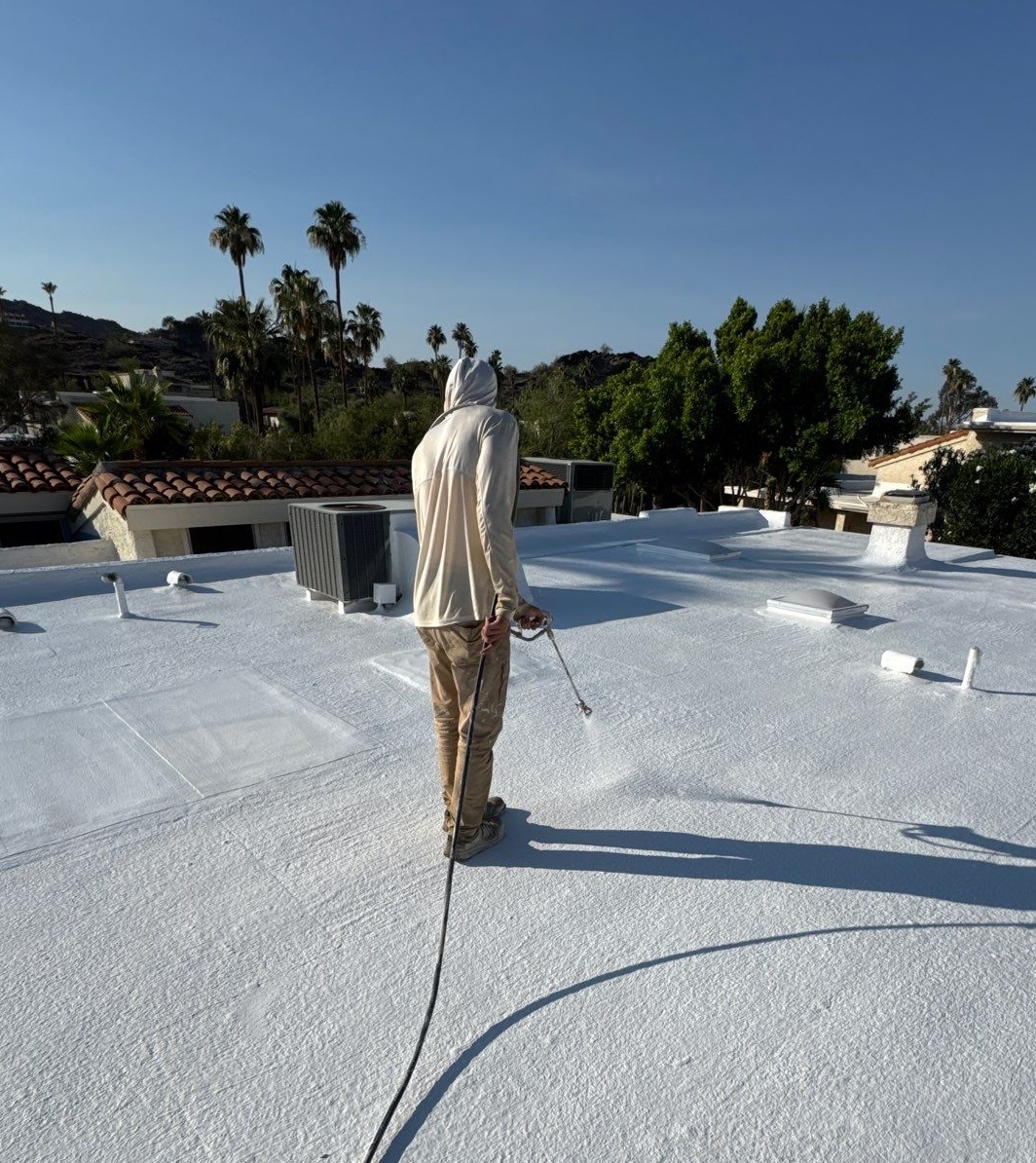
Why Foam Roof Recoating Is Essential in Phoenix
If you own a home or commercial building in Phoenix with a spray polyurethane foam (SPF) roof, recoating is not optional — it is the single most important maintenance task that determines whether your roof lasts 20 years or 50+. The intense Arizona sun, with UV index readings regularly hitting 10 or above from May through September, breaks down the protective coating that shields your foam from degradation. Without that coating, your roof's lifespan shrinks dramatically.
Unlike a full foam roof replacement, recoating is a relatively affordable process that essentially resets the clock on your roof's protective layer. Think of it like sunscreen for your roof — the foam underneath does the heavy lifting for insulation and waterproofing, but the coating on top is what keeps it all protected from Phoenix's brutal UV exposure.
What Exactly Is Foam Roof Recoating?
Foam roof recoating involves applying a new layer of protective elastomeric or silicone coating over your existing SPF roof system. The process serves several critical functions:
- UV protection: The coating acts as a barrier against ultraviolet radiation, which is the number one enemy of exposed spray foam
- Waterproofing: A fresh coating seals any micro-cracks or wear areas that have developed over time
- Reflectivity: New coatings restore the bright white, reflective surface that helps keep your building cool and reduces energy bills
- Structural protection: The coating prevents moisture from penetrating the foam layer, which would cause deterioration from within
During the recoating process, a qualified contractor will first inspect the entire roof surface, repair any blisters, cracks, or damaged areas, clean the surface thoroughly, and then apply the new coating in one or two passes depending on the system being used.
How Often Should You Recoat a Foam Roof in Phoenix?
The general industry recommendation for foam roof recoating is every 5 to 10 years, but in Phoenix, you should plan toward the shorter end of that range. Here is why the local climate matters so much:
Phoenix-Specific Factors That Accelerate Coating Wear
- Extreme UV exposure: Phoenix averages over 299 sunny days per year. That is nearly continuous UV bombardment on your roof surface, far more than most U.S. cities
- Surface temperatures exceeding 170°F: During summer months, roof surface temperatures in the Phoenix metro area can reach 170°F or higher, which accelerates the chemical breakdown of coating materials
- Monsoon season stress: The July through September monsoon season brings sudden, intense rainstorms with high winds and sometimes hail. These weather events test the integrity of your coating and can expose vulnerabilities
- Thermal cycling: While Phoenix does not get extremely cold, the daily temperature swings — especially in spring and fall — cause expansion and contraction that stresses the coating over time
Recommended Recoating Schedule for Phoenix
Based on local conditions, here is a practical schedule:
- Silicone coatings: Recoat every 7 to 10 years. Silicone holds up better to ponding water and UV exposure but costs more upfront
- Acrylic elastomeric coatings: Recoat every 5 to 7 years. These are more affordable but degrade faster under extreme UV and do not perform well with standing water
- First recoat after new installation: Plan for your first recoat approximately 5 years after a new foam roof installation, then adjust future intervals based on inspection results
The best approach is to schedule a professional roof inspection annually — ideally in the spring before monsoon season — so your contractor can assess coating condition and recommend recoating before problems develop.
Signs Your Foam Roof Needs Recoating Now
Do not wait for a leak to tell you the coating has failed. Here are the warning signs every Phoenix property owner should watch for:
Visual Indicators
- Color change: A healthy foam roof coating is bright white or light gray. If your roof has turned yellow, tan, or dark gray, the coating is degrading and losing its reflective and protective properties
- Visible foam texture: If you can see the rough, orange-peel texture of the foam itself rather than a smooth coating surface, the coating has worn through in those areas
- Chalking: Run your hand across the roof surface. If it comes away with a white, powdery residue, the coating is breaking down. Some chalking is normal early on, but heavy chalking indicates it is time for recoating
- Cracking or alligatoring: Fine cracks in the coating surface — especially patterns that resemble alligator skin — mean the coating has lost its elasticity and is no longer providing adequate protection
Performance Indicators
- Rising energy bills: If your cooling costs have increased without other explanation, a degraded roof coating may have lost its reflective properties, allowing more heat transfer into your building
- Small leaks or moisture stains: Any sign of water intrusion means the coating and possibly the foam have been compromised. Address this immediately with a professional foam roof repair
- Ponding water that does not dry within 48 hours: While this can indicate a drainage issue, it also accelerates coating wear in the ponding areas
What Happens If You Skip Recoating?
Neglecting to recoat your foam roof in Phoenix is one of the most expensive mistakes you can make as a property owner. Here is the progression of damage:
Stage 1: Coating Degradation (Years 1-2 Past Due)
The coating loses its reflective properties first. Your energy bills increase as more solar heat penetrates into the building. The coating begins to crack and chalk heavily, but the foam underneath is still largely intact.
Stage 2: Foam Exposure (Years 2-4 Past Due)
With the coating compromised, UV radiation begins attacking the foam directly. SPF is highly susceptible to UV damage — exposed foam can degrade at a rate of about 1 mil (one-thousandth of an inch) per day in direct Arizona sunlight. The foam surface turns dark and becomes powdery. Moisture begins to penetrate.
Stage 3: Structural Damage (Years 4+ Past Due)
Moisture trapped in deteriorated foam leads to delamination from the substrate. During monsoon season, water intrusion causes interior damage — stained ceilings, damaged insulation, potential mold growth. At this point, recoating alone will not fix the problem. You are now looking at partial or full roof replacement, which costs dramatically more than a timely recoat would have.
The bottom line: a recoating that costs $1.50 to $3.50 per square foot can prevent a replacement that costs $5.00 to $8.00+ per square foot. For a typical 2,000-square-foot Phoenix home, that is the difference between $3,000 to $7,000 for a recoat versus $10,000 to $16,000+ for a replacement.
Elastomeric vs. Silicone Coatings: Which Is Better for Phoenix?
When it is time to recoat, you will need to choose between two main coating types. Both have legitimate uses in the Phoenix market, but they perform differently under our conditions.
Acrylic Elastomeric Coatings
Pros:
- Lower cost — typically $1.50 to $2.50 per square foot applied
- Excellent adhesion to existing coatings and foam
- Good reflectivity when new (Solar Reflectance Index above 100 is common)
- Easy to work with, which can mean faster application and lower labor costs
- Available in multiple colors if aesthetics matter
Cons:
- Degrades faster under extreme UV — expect 5 to 7 year recoat cycles in Phoenix
- Not suitable for areas with ponding water. Acrylic coatings can re-emulsify (soften and dissolve) when submerged for extended periods
- Requires dry conditions for application — cannot be applied during monsoon season rains
Silicone Coatings
Pros:
- Superior UV resistance — maintains integrity longer under Phoenix sun, lasting 7 to 10 years between recoats
- Excellent ponding water resistance. If your roof has low spots where water collects, silicone is the clear winner
- Maintains flexibility and does not become brittle over time
- Can be applied in a wider range of conditions
Cons:
- Higher cost — typically $2.50 to $3.50 per square foot applied
- Attracts and holds dirt more readily, which can reduce reflectivity over time (though this is mainly cosmetic in terms of roof protection)
- Subsequent recoats require careful surface preparation because new silicone does not always adhere well to old, dirty silicone
- Limited color options — mostly white or light gray
Our Recommendation for Phoenix Properties
For most Phoenix homes and commercial buildings, silicone coatings offer the better long-term value despite the higher upfront cost. The extended recoat cycle (7 to 10 years vs. 5 to 7 years) means fewer recoating projects over the life of your roof, and the superior UV and ponding water resistance are particularly valuable in our climate. However, for properties on a tight budget or roofs with excellent drainage and minimal ponding, acrylic elastomeric coatings remain a solid, cost-effective option.
The Recoating Process: What to Expect
Understanding what a professional recoating involves helps you evaluate contractor quotes and ensures you know what you are paying for.
Step 1: Inspection and Assessment
A thorough roof inspection identifies all areas needing repair before recoating. This includes checking for blisters, cracks, delamination, ponding areas, and flashing condition around penetrations like vents and HVAC units.
Step 2: Repairs
Any blisters, bubbles, or damaged foam sections are repaired first. This might involve cutting out damaged foam and re-spraying those areas, or applying patches. Skipping this step means you are sealing problems under the new coating.
Step 3: Surface Preparation
The roof surface must be clean, dry, and free of debris, dirt, and loose material. This typically involves power washing or thorough hand cleaning. Proper surface prep is critical — coating adhesion depends on it.
Step 4: Priming (If Required)
Some coating systems or substrate conditions require a primer coat for proper adhesion. Your contractor should specify whether primer is included.
Step 5: Coating Application
The new coating is applied using airless spray equipment, rollers, or a combination. Most professional applications involve two coats applied in perpendicular directions to ensure uniform coverage. Total dry film thickness typically ranges from 20 to 30 mils, though manufacturer specifications vary.
Step 6: Inspection and Documentation
A final inspection verifies uniform coverage, proper thickness, and adhesion. Reputable contractors will provide documentation including the products used, coverage rates, and warranty information.
Foam Roof Recoating Costs in Phoenix
Here are realistic cost ranges for foam roof recoating in the Phoenix metro area as of 2026:
- Acrylic elastomeric recoating: $1.50 to $2.50 per square foot, including surface preparation and minor repairs
- Silicone recoating: $2.50 to $3.50 per square foot, including surface preparation and minor repairs
- Typical residential project (1,500 to 2,500 sq ft): $3,000 to $8,750 depending on roof size, condition, and coating type
- Commercial projects: Often lower per-square-foot costs due to larger scale, typically $1.25 to $3.00 per square foot for commercial roof recoating
Factors that can increase costs include extensive repairs needed before recoating, difficult roof access, multiple penetrations or complex flashing details, and removal of previous failed coating. If cost is a concern, ask about roof financing options that can make the investment more manageable.
How Recoating Fits Into Your Overall Roof Maintenance Plan
Recoating is the most significant maintenance event for a foam roof, but it is not the only one. A comprehensive roof maintenance plan for Phoenix properties should include:
- Twice-annual inspections: Once in spring (pre-monsoon) and once in fall (post-monsoon)
- Debris removal: Clear any debris, especially after dust storms and monsoon events
- Drainage maintenance: Ensure scuppers, drains, and gutters are clear and functioning
- Minor repairs: Address small issues like punctures or cracks before they grow
- Recoating: On the schedule appropriate for your coating type, as outlined above
When properly maintained with timely recoating, an SPF roof in Phoenix can last 30 to 50 years or even longer — making it one of the most durable and cost-effective roofing systems available for our climate. To learn more about whether foam roofing is the right choice for your property, visit our guide on why foam roofing is a smart choice for Phoenix homes, or contact our team for a free inspection and recoating estimate.